

Medical Device Trends and the Temperature Control Behind Them
5 Emerging Medical Device Trends and the Temperature Control Behind Them
Medical devices are getting smarter, smaller, and more personalized. Wearables are taking on a greater role in patient care, implants are becoming more sophisticated, and new manufacturing technologies are expanding what’s possible in device design and production.
As devices become more complex and performance demands increase, temperature tolerances are getting tighter too. Precise temperature control is critical across medical device development, from material processing and component testing to production, validation, and equipment cooling.
Here are five emerging trends shaping medical device development and the temperature control behind them.
Where Temperature Control Meets Medical Device Innovation
- Smart Orthopedic Implants Add Sensing and Monitoring
- 3D Printing Expands Patient-Specific Device Design
- Miniaturization Drives Smaller, Less-Invasive Devices
- Wearables Move Further Into Clinical Care
- Photon-Counting CT and Advanced MRI Deliver More Detailed Imaging
1. Smart Orthopedic Implants Add Sensing and Monitoring
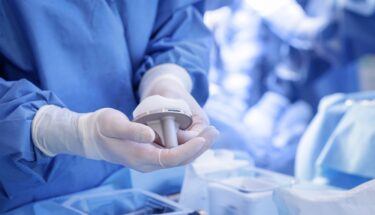
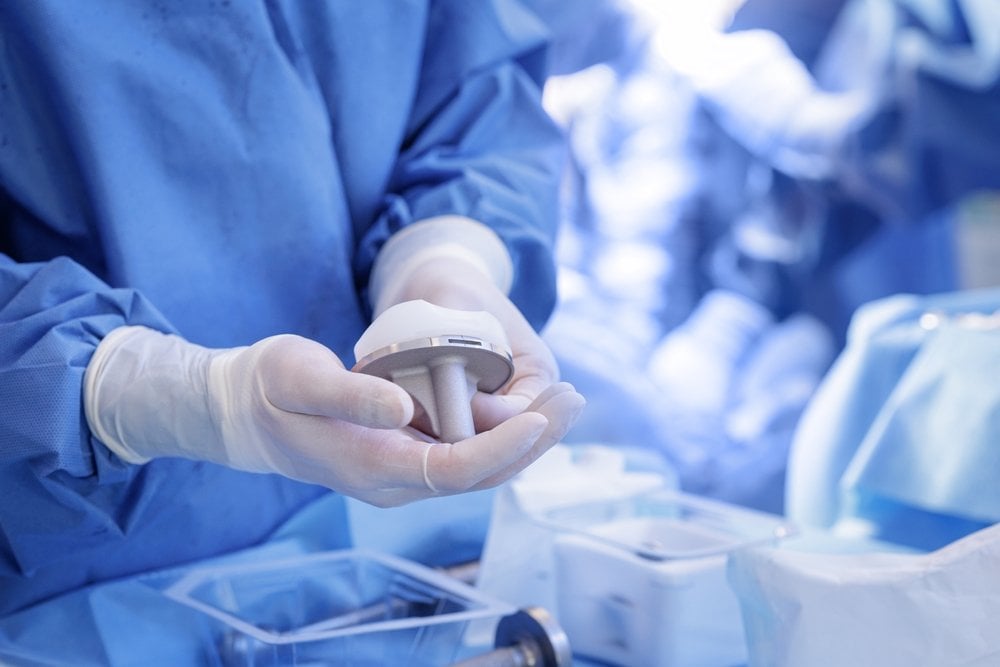
Hip and knee implants are beginning to do more than restore movement. Newer smart implants integrate sensors, microelectronics, and wireless communication to monitor what is happening inside the joint after surgery. Researchers are developing systems that can track joint load, strain, motion, temperature, and other conditions that may provide earlier insight into implant performance, rehabilitation, infection, or loosening.
A 2025 smart hip implant study, for example, embedded piezoelectric sensors within the femoral head to measure joint forces during simulated walking, jogging, and running, while also generating enough energy to support wireless data transmission.
Temperature Control Across the Additive Manufacturing Process
Before an implant can perform inside the body, developers need to understand how the device and its sensors behave under physiological conditions. Orthopedic implant testing commonly uses fluid environments held near body temperature to reproduce conditions inside a joint. In hip wear testing, for example, ISO 14242 testing uses calf serum maintained at 37 °C while the implant undergoes millions of loading and movement cycles.
Precise liquid temperature control keeps those simulated joint environments stable while developers evaluate wear, mechanical performance, sensor response, and long-term reliability.
2. 3D Printing Expands Patient-Specific Device Design
3D printing is giving medical device developers more freedom to create devices around the anatomy of an individual patient. Using medical imaging data, manufacturers can produce patient-matched implants, surgical guides, prostheses, and other devices with geometries that would be difficult to achieve through conventional manufacturing.
The technology is also becoming more established in orthopedic applications. In May 2026, the FDA issued final guidance specifically addressing patient-matched guides for orthopedic implants, reflecting the growing role these devices play in surgical planning and placement.
Why Temperature Control Matters in Additive Manufacturing
For metal devices produced through laser-based additive manufacturing, temperature affects the build itself. Powder-bed temperature must be carefully controlled to support proper fusion, dimensional accuracy, and structural integrity, while high-power laser sources also generate heat that must be removed during operation.
Precise liquid temperature control can support both sides of the process by maintaining defined powder-bed conditions and removing heat from laser systems during long or demanding builds.
3. Miniaturization Drives Smaller, Less-Invasive Devices
Medical device developers continue to push catheters, delivery systems, sensors, and other minimally invasive devices toward smaller profiles without sacrificing strength or functionality. In catheter design, that means thinner walls, tighter tolerances, and more complex tubing capable of reaching smaller and more difficult anatomy. Recent industry reporting identifies miniaturization as a major catheter-development trend.
Temperature Control for Smaller, More Complex Devices
Many of these devices depend on precision polymer extrusion. As tubing dimensions shrink, small changes in processing conditions can have a greater effect on wall thickness, dimensional stability, and mechanical properties. Cooling is especially important after the polymer exits the die because the rate of heat removal can influence crystallization, internal stress, and final shape. Precision extrusion plays a critical role in medical device manufacturing.
Precise temperature control supports repeatable cooling during extrusion, giving manufacturers tighter control over the conditions that influence final dimensions and material performance.
4. Wearable Biosensors Push Beyond Physical Activity Tracking
Wearable medical devices are moving beyond step counts and heart-rate monitoring. Newer biosensors can measure biomarkers such as glucose, lactate, and electrolytes using sweat, saliva, tears, and interstitial fluid. Advances in microfluidics and electrochemical sensing are making continuous, real-time monitoring increasingly possible.
In one wearable hydration study, researchers tested sodium measurements at 20 °C, 32 °C, and 40 °C and found enough temperature-related variation to require a correction factor in the device firmware.
The Temperature Control Connection
Temperature can affect sensor response and calibration. During development, precise liquid temperature control allows researchers to hold test solutions at defined temperatures and evaluate sensitivity, drift, response time, and calibration under repeatable conditions. In one electrochemical biosensor study, researchers used a JULABO circulating water bath to maintain the test solution at 37 °C while generating calibration curves.
5. Photon-Counting CT and Advanced MRI Deliver More Detailed Imaging
Medical imaging systems are pushing toward greater detail and more information from every scan. Photon-counting CT uses semiconductor detectors that count individual X-ray photons and sort them by energy, improving spatial resolution, dose efficiency, and spectral imaging capabilities. Recent research shows photon-counting CT moving from prototype systems into clinical use.
MRI systems are advancing too. Newer high-performance systems use much stronger gradient coils to improve diffusion imaging and spatial resolution. Siemens’ MAGNETOM Cima.X, for example, uses 200 mT/m whole-body gradients to visualize structures that were previously difficult to see.
Temperature Control for High-Performance Imaging
More powerful imaging hardware also generates more heat. Photon-counting detectors depend on stable temperatures because thermal drift can affect charge transport, detector gain, threshold stability, and spectral accuracy. Temperature management is considered an important part of maintaining photon-counting detector performance.
MRI gradient systems face similar demands. The Cima.X uses direct liquid cooling to maximize heat transfer from its high-performance gradient coils, illustrating how precise cooling becomes increasingly important as imaging systems push toward higher power and resolution.
Frequently Asked Questions
Why does temperature control matter in medical device development?
Temperature can affect material behavior, sensor response, calibration, dimensional stability, electronics performance, and equipment reliability. Precise temperature control helps developers create repeatable test conditions and evaluate how devices and components perform under defined thermal conditions.
What medical device applications require precision temperature control?
Common applications include implant testing, sensor calibration, polymer extrusion, additive manufacturing, electronics cooling, imaging-system cooling, material testing, and process validation.
How is liquid temperature control used in medical device testing?
Liquid temperature control can be used to maintain test fluids, simulated physiological environments, process fluids, or equipment cooling loops at a defined temperature. This allows developers to reproduce conditions consistently while evaluating device performance, material behavior, sensor accuracy, and long-term reliability.
Conclusion
As medical device technology advances, development teams are working with tighter tolerances, more complex materials, more sensitive sensors, and higher-performance equipment. Across these applications, precise temperature control supports the repeatability needed to test, validate, and refine new devices before they move into production or clinical use.
Explore JULABO USA’s temperature control solutions for medical device development or contact our team to discuss your application.