

Liquid Temperature Control in Cosmetics and Fragrances
Authored by: Dr. Dirk Frese, VP of Sales, Marketing & Service
Introduction
The cosmetic and fragrance industry represents a dynamic field of research and manufacturing. From skincare to makeup and perfumes, these products have a real impact on daily life and sensory experience—strengthening self-confidence and elevating mood through applications like aromatherapy and environmental scenting.
These topics have accompanied me for quite some time, from my student work on the analysis and synthesis of rose fragrance components to the development of test systems for skincare cosmetics and biotechnological sunscreen precursors. Across all these areas, temperature control has played a central role, whether in water baths, incubators, ovens, distillation equipment, or freezers.
Precise thermal management is critical for liquid formulations, where temperature directly affects viscosity, stability, and the integrity of active or volatile ingredients. Systems such as emulsions, creams, and alcohol-based fragrances require controlled heating and cooling to ensure consistent texture, performance, and aromatic profiles while minimizing evaporation losses. Circulators provide stable, accurate temperature control across research and production. This level of control is essential in fragrance processes like extraction, distillation, and testing, as well as cosmetic formulation steps such as emulsification and cooling, where even small fluctuations can impact quality and reproducibility.
Circulators in Fragrance Analysis and Synthesis
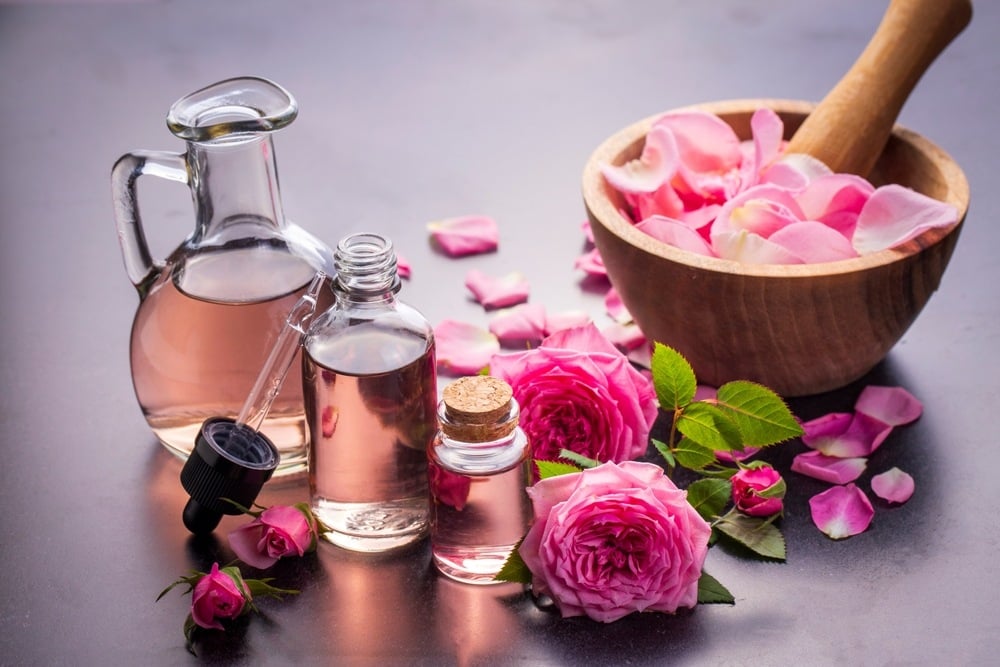
In fragrance research, circulators are used across a wide range of processes, including extraction, distillation, and component synthesis. Many aromatic compounds are volatile and heat-sensitive, so even slight temperature deviations can affect composition, yield, or analytical reliability. For this reason, precise liquid temperature control is not just a technical detail but a requirement for working reproducibly with delicate fragrance materials.
To meet these temperature control requirements, different JULABO circulator types are used depending on the application. For routine laboratory tasks, the CORIO line offers a practical solution for stable temperature control. When both heating and cooling are required, refrigerated/heating circulators are particularly useful because they allow defined temperature ranges for extraction, sample preparation, and separation steps. For synthesis work, heating circulators like the DYNEO or MAGIO products provide the consistent elevated temperatures needed to maintain controlled reaction environments while protecting sensitive fragrance molecules. Larger-scale extractions often require temperatures down to -80°C, while mixing and distillation steps can reach up to 100°C in typical steam distillation processes. This is the wheelhouse of the PRESTO line of circulators from JULABO.
During analytical work, circulators ensure that sample preparation and separation proceed under reproducible conditions, which is essential for reliable fragrance profiling and quality assessment. In synthesis, they improve process stability and reduce variation between batches. Across all of these applications, JULABO circulators provide the precise thermal management required for fragrance research, making them an important part of both development and testing workflows.
Circulators in Skincare and Emulsion Development
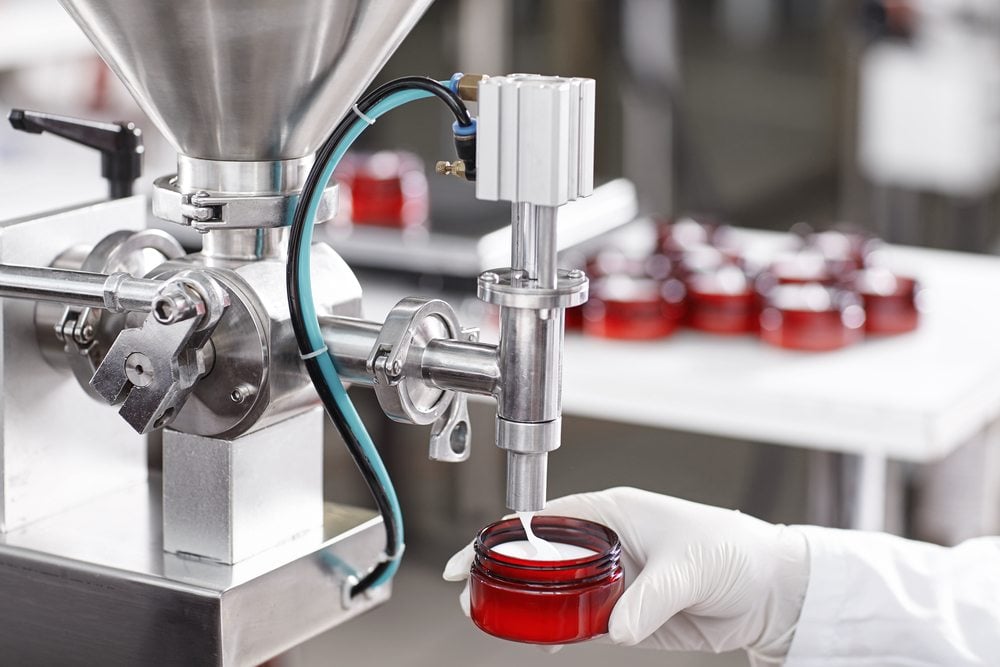
Cosmetic formulations such as creams, lotions, and serums often require emulsification under carefully controlled thermal conditions, where precise temperature control is essential for both process stability and final product quality. JULABO circulators are well suited for these applications, allowing reliable heating and cooling of vessels during phase preparation, homogenization, and stabilization. Temperature directly influences viscosity, droplet size, and the overall texture of the formulation.
Different JULABO equipment is used depending on the process and its temperature control requirements. Heating circulators are useful when phases must be brought to a defined temperature for melting waxes, dissolving components, or maintaining a uniform processing temperature. Refrigerated/heating circulators become especially valuable when a formulation requires both warming and controlled cooling, for example during emulsion formation or when a product must be returned to a stable state after processing. For routine laboratory work, the CORIO line provides a practical and flexible option for precise liquid temperature control. Other instruments used in recent publications include compact circulators such as the CF41 and the DYNEO DD-300F for emulsification and microencapsulation.
In addition, precise thermal control ensures that sensitive active ingredients, botanical extracts, and additives are incorporated without degradation. This is particularly important in cosmetic systems where even small temperature fluctuations can change the stability or performance of the product. By enabling reproducible heating and cooling steps, JULABO circulators deliver consistent batch quality and more reliable formulation development.
Advanced Temperature Control in Sunscreen and Functional Cosmetic Testing

JULABO circulators create the tightly controlled thermal environments required for rigorous and reliable testing. From the accessible CORIO line to the more advanced MAGIO systems, these units deliver highly precise temperature control, allowing researchers to observe how precursor materials and complex formulations behave under defined conditions. This level of control is especially valuable during accelerated stability studies, where wide temperature ranges and programmable ramp functions make it possible to simulate long-term environmental exposure in a shorter timeframe and predict how active ingredients such as UV filters will perform over time.
At the same time, JULABO equipment enables detailed ingredient screening by maintaining exceptional temperature stability down to ±0.01 °C, ensuring that tests on solubility or chemical reactivity remain consistent and free from unwanted thermal variation. This consistency extends to experimental reproducibility. With robust pressure and suction pumps, these systems maintain uniform temperatures across connected external setups, enabling accurate replication from early-stage lab work through pilot-scale production. From initial formulation through final quality assurance, JULABO provides a dependable, “set-it-and-forget-it” solution that ensures every sunscreen and cosmetic product meets demanding standards for safety and performance.
Circulators in Stability, Storage, and Process Reproducibility
Beyond initial formulation, JULABO circulators play a critical role in rigorous stability testing and long-term storage studies, ensuring that cosmetics and fragrances remain chemically and physically stable throughout their intended lifespan. Researchers depend on the precision and reliability of the CORIO, DYNEO, and MAGIO series to maintain tightly controlled thermal conditions. Many of these systems are now available with natural refrigerants, such as the MAGIO MS-1200F, as well as in the new VALEGRO product line, pictured below.
These advanced units enable highly controlled experimentation, allowing users to monitor how formulations respond to both heating and cooling, with rapid temperature changes supporting demanding test protocols. They also simplify thermal cycling, with wide temperature ranges down to -90°C and programmable profiles that replicate real-world transport and storage stresses. With temperature stability of up to ±0.01 °C, JULABO equipment delivers precise, reproducible data. This allows researchers to predict shelf life by identifying when formulations begin to degrade or “cream,” uncover structural weak points in delicate emulsions before they reach the consumer, and improve manufacturing consistency through dynamic temperature control systems such as the PRESTO line, ensuring uniform, high-quality results across every batch.
Outlook and Significance for the Industry
As cosmetic and fragrance products become more complex and performance-driven, the need for precise temperature control continues to grow. Circulators improve reproducibility, product quality, and development efficiency. They also drive innovation by enabling researchers to work with sensitive, complex, and increasingly multifunctional ingredients. Liquid temperature control remains an essential technology across the field.