

The Hidden Science of Beauty: Temperature Control in Cosmetics and Supplements
Authored by: Dr. Dirk Frese, VP of Sales, Marketing & Service
In the world of beauty products, where promises of radiant skin and luscious hair abound, there’s an unsung hero working behind the scenes: temperature control.
This blog post delves into the fascinating world of temperature control in the beauty industry. We’ll explore how maintaining the right temperatures throughout the manufacturing and testing processes ensures the potency of active ingredients, the stability of formulations, and the overall quality of the products your customers apply to their skin or ingest as supplements.
Get ready to discover why keeping things at just the right temperature is essential to looking and feeling best.
A. Cosmetics Manufacturing
Precise temperature control is essential in various stages of cosmetic product manufacturing to ensure consistent quality, stability, and desired properties. Here are some key applications:
1. Emulsification
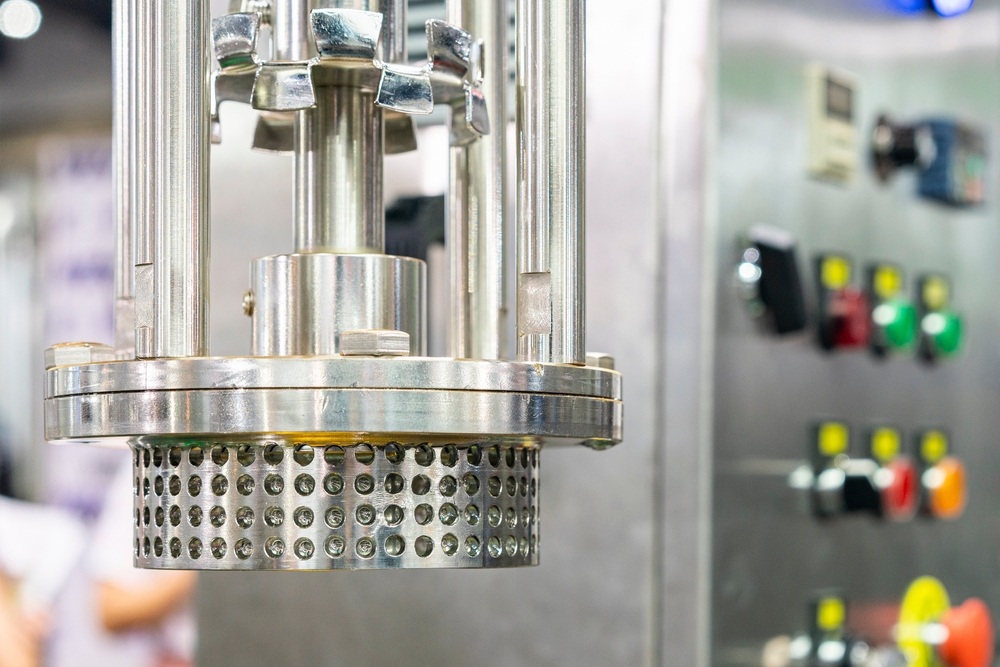
Many cosmetic products like lotions, creams, and makeup foundations are emulsions – a mixture of oil and water phases stabilized by emulsifiers. The emulsification process often requires heating the ingredients to a specific temperature range, typically around 70-80 °C, to facilitate the formation of a stable emulsion. Circulators like JULABO’s CORIO CD-BT series are well-suited for controlling the temperature of jacketed vessels used in this process.
2. Melting and Molding
For products like lipsticks, lip balms, and solid makeup, the ingredients (waxes, oils, pigments) need to be melted and then poured into molds. Temperature control units like JULABO’s PRESTO A45 refrigerated circulators can precisely control the melting temperature (around 80-90°C) as well as the cooling rate during solidification in the molds, which affects the final product texture and appearance.
3. Viscosity Adjustment
The viscosity of many cosmetic formulations is temperature dependent. Heating can reduce viscosity for easier mixing and processing, while cooling increases viscosity to the desired final consistency. Circulators with a wide temperature range, such as JULABO’s CORIO CD-BC4, allow for precise viscosity adjustment during manufacturing.
4. Quality Control
Precise temperature control is essential for ensuring the quality and consistency of cosmetic products and supplements. JULABO’s CORIO CD-BT series of open bath circulators are ideal for quality control tasks. These circulators feature a polycarbonate bath for easy sample access and visualization, with temperature ranges from -20 °C to 100 °C. The CORIO CD-BT19 model, with a 19-liter bath capacity and heating power of up to 2 kW, is commonly used for testing the stability and viscosity of cosmetic formulations under different temperature conditions.
5. Temperature Simulation
Temperature simulation studies are essential for developing new cosmetic formulations. JULABO’s CORIO CD-BC4 circulators are commonly used for this purpose, providing a temperature range of -20°C to 100°C and a powerful pressure/suction pump for external circulation. The CORIO CD-BC4 can be connected to jacketed reactors or vessels to precisely control the temperature of the product during development and testing phases.
In summary, temperature control circulators from manufacturers like JULABO play a vital role in ensuring consistent quality, stability, and desired properties of cosmetic products throughout the manufacturing process, from emulsification and melting to viscosity adjustment, quality control, stability testing and temperature simulation studies.
B. Beauty Supplements
Beauty supplements are a specialized category within the broader dietary supplement industry, focusing on products that aim to enhance skin, hair, and nail health. The manufacturing and testing processes for beauty supplements involve several key steps, with temperature control playing a crucial role throughout.

1. Manufacturing Process of Beauty Supplements
The most critical steps in the production of beauty supplements are ingredient sourcing first. Where high-quality raw materials such as vitamins, minerals, collagen, biotin, and other beauty-enhancing compounds are sourced from reputable suppliers. Next is the formulation of these ingredients where they are combined in specific ratios to create the desired formula. Ensuing is the production in various forms such as tablets, capsules, powders, or liquids before lastly testing is performed to ensure product safety, efficacy, and consistency.
The testing processes encompass raw material testing, when each ingredient is tested for identity, purity, and potency before use in production. In-process testing follows with many quality checks at various stages to maintain consistency before the final product is analyzed for composition, purity, strength, and contaminants. Finally, it is important to check for the stability of the products over time under various environmental conditions.
2. Temperature Control with Circulators in these Processes
Temperature control is critical in both the manufacturing and testing of beauty supplements. Circulators play a vital role in maintaining precise temperatures throughout these processes:
2.1. Manufacturing processes: Many production steps, such as mixing, blending, and encapsulation, require precise temperature control to ensure product quality and consistency. Circulators as the JULABO DYNEO DD-200F help maintain these temperatures during production.
2.2. Chemical analysis: Many analytical techniques used to test beauty supplements, such as High-Performance Liquid Chromatography (HPLC) or spectroscopy, require precise temperature control for accurate results. Circulators help maintain these temperatures during analysis. More details you may find here, in the blog-post about diverse analytical techniques.
As a sidenote it is worth mentioning that temperature control is essential for ingredient storage, stability and shelf-life testing of the final product as well as microbiological testing, which generally is accomplished using incubators and environmental chambers.
Conclusion
By utilizing circulators for temperature control, manufacturers can ensure that beauty supplements are produced and tested under optimal conditions, leading to higher quality products with consistent efficacy and longer shelf life.
In essence, while consumers may focus on the visible results of their favorite beauty products, it’s the behind-the-scenes precision of temperature control, enabled by circulators, that helps deliver the promise of beauty in every bottle, jar, and capsule.