



5 Trends Driving Automotive Engineering and What They Mean for Thermal Testing
The automotive industry isn’t easing into change; it’s accelerating through it. Electric drivetrains are replacing combustion engines. Sensors and software are taking over tasks once handled by drivers. And the labs responsible for testing these technologies are under pressure to keep pace.
Amid all this change, temperature control plays a more important role than ever. As components get smaller and more powerful, the demands on temperature management grow. From simulating arctic cold starts to stabilizing systems that generate their own internal heat, today’s validation work depends on precision temperature control you can trust.
This article examines five trends in automotive engineering that are reshaping the design, testing, and validation of systems. Together, they’re raising the stakes for temperature control as engineers work to simulate more extreme conditions with greater precision than ever before.
5 Automotive Innovations Accelerating the Need for Better Temperature Control
- Power electronics for electric drivetrains
- Advanced adhesives and thermal interface materials (TIMs)
- Sensor systems for ADAS and autonomy
- Integrated e-axle thermal loop dynamics
- Compatibility testing for new fluids and materials
1. Power Electronics for Electronic Drivetrains: How Do You Test Components That Generate Their Own Heat?
Electric vehicles rely on high-voltage power electronics to manage energy between the battery, motor, and onboard systems. Inverters, converters, and onboard chargers are becoming smaller, more efficient, and more powerful—and all of that comes with a steep rise in internal heat generation. Today’s wide bandgap semiconductors, like silicon carbide (SiC) and gallium nitride (GaN), deliver major performance gains but also raise the bar for thermal performance.
Unlike passive components, power modules generate heat. That means engineers need to test for two things at once: how external temperature conditions affect performance, and how internal heat builds up and dissipates during use. According to the U.S. Department of Energy, future EV platforms may demand power densities of 33 kW/L or higher. To validate these systems, testing protocols must simulate rapid thermal transitions, long high-load dwell periods, and cold-start conditions across operating ranges from -40 °C to +125 °C, and sometimes beyond.
Thermal validation is typically guided by standards for automotive-grade electronics. The AEC-Q101 specification defines qualification criteria for discrete semiconductors such as transistors and diodes. For power modules used in EV inverters and converters, many automotive suppliers reference the AQG 324 guideline, which outlines stress testing protocols including thermal cycling, ramp rates, and environmental durability. These test profiles often require thermal stability within ±0.1 °C under electrical load, especially when failures only emerge after repeated cycling.
Temperature Control Solutions and Product Recommendations for Power Electronics:
Converters and inverters with cooling loads <2.5kW can utilize the MAGIO MX-2500F for testing in environmental chambers. Battery assembly testing typically requires more cooling capacity which aligns with the PRESTO model series.Models from the A45, W55, W56 and W58x afford a wide choice of heating / cooling power. All PRESTO models can be equipped with a FlexiRack for precise flow rate control to the DUT (Device Under Test).
2. Gap-Filling Adhesives & TIMs: How Do You Validate Materials That Shift Under Thermal Stress?
As EV platforms evolve, adhesives and thermal interface materials (TIMs) are replacing mechanical fasteners throughout battery and powertrain systems. These materials reduce weight, improve thermal transfer, and increase reliability, but they also introduce complex behavior that can shift dramatically under thermal and mechanical stress.
In modern battery designs, especially cell-to-pack architectures, TIMs must deliver both thermal conductivity and mechanical flexibility across thousands of cycles (eMobility Engineering). Gap fillers and bonding agents are expected to absorb vibration, maintain adhesion, and transfer heat consistently — even as temperatures rise and fall.
The Testing Imperative for Adhesives and TIMs
A typical validation may include:
- 500 to 1,000 thermal cycles between operating extremes
- Monitoring of bond strength, thermal conductivity, and dimensional stability
- Mechanical load to simulate vibration, compression, and thermal expansion
- Precise ramp control to evaluate both gradual transitions and thermal shock
Without thermal validation, these materials risk failure in the field, leading to hot spots, reduced cooling efficiency, or mechanical separation over time.
Temperature Control Solutions for Adhesives and TIMs
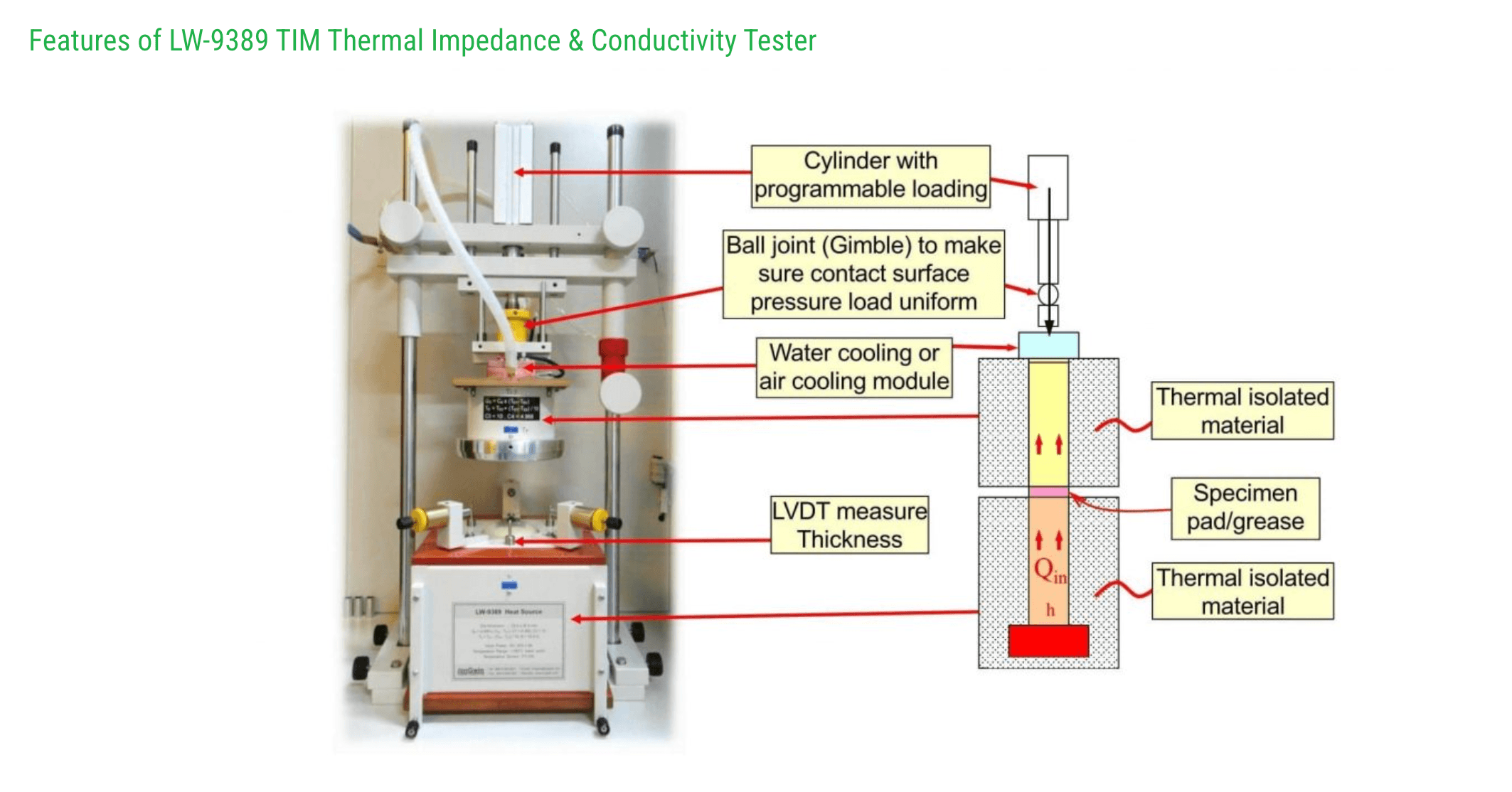
Photo Credit: https://myheatsinks.com/thermal-interface-material-test/
A basic ASTM 5470 test conducted on a press with sensors and a heat source (electrical) and a cold side that could use a chiller like the VALEGRO 500 or VALEGRO 1201.
ADAS and Sensors: How Do You Ensure Reliability Across Harsh Temperature Swings?
The push toward assisted and autonomous driving has transformed the vehicle into a sensor-rich platform. From radar and LiDAR to ultrasonic sensors and advanced camera systems, these technologies feed the algorithms responsible for lane detection, emergency braking, and adaptive cruise control.
But precision isn’t just about what these sensors can detect—it’s about how reliably they perform in any environment. From subzero mornings to scorching asphalt in July, ADAS sensors like radar, LiDAR, and cameras are expected to perform without fail.
For engineers, that means rigorous temperature testing is non-negotiable. Optical and electronic components must undergo environmental simulations that account for sudden changes in ambient temperature, long-term thermal cycling, and exposure to extremes. Sensors may be tested independently or as part of fully integrated vehicle control systems, adding complexity to the test stand and making precise thermal control even more critical.
3. ADAS and Sensors: How Do You Ensure Reliability Across Harsh Temperature Swings?
The push toward assisted and autonomous driving has transformed the vehicle into a sensor-rich platform. From radar and LiDAR to ultrasonic sensors and advanced camera systems, these technologies feed the algorithms responsible for lane detection, emergency braking, and adaptive cruise control.
But precision isn’t just about what these sensors can detect—it’s about how reliably they perform in any environment. From subzero mornings to scorching asphalt in July, ADAS sensors like radar, LiDAR, and cameras are expected to perform without fail.
For engineers, that means rigorous temperature testing is non-negotiable. Optical and electronic components must undergo environmental simulations that account for sudden changes in ambient temperature, long-term thermal cycling, and exposure to extremes. Sensors may be tested independently or as part of fully integrated vehicle control systems, adding complexity to the test stand and making precise thermal control even more critical.
Temperature Control Solutions for ADAS and Sensors:
Temperature cooling / heating power demands will vary depending on the design of the test stand. JULABO products for testing include the MAGIO MS-1000FF, PRESTO A80, PRESTO W85.
4. E-Axle Thermal Loops: How Do You Validate Multi-Zone Cooling Systems Under Load?
As electric drivetrains evolve, the rise of integrated e-axles, which combine the electric motor, inverter, and gearbox into a single compact housing, is transforming thermal management strategies. These systems often share a common cooling loop with the battery, creating complex multi-zone heat dynamics with different temperature targets and material sensitivities.
Each component behaves differently:
- Motors and inverters may operate safely at higher temperatures.
- Batteries, by contrast, require tighter thermal windows to avoid degradation or safety risks.
- Coolants must maintain consistent flow and thermal conductivity across varied conditions.
To ensure safety and performance, engineers must simulate realistic thermal conditions across all zones:
- Heat load balancing and loop flow analysis
- Precise ramping between component-specific setpoints
- Evaluation of phase change and coolant behavior under load
- Testing for thermal gradients, hot spots, and stress accumulation
According to IDTechEx, integrated thermal systems like these are becoming standard across EV platforms to reduce weight, cost, and complexity, making thermal testing and validation even more essential as power densities increase and packaging gets tighter.
“Thermal performance remains one of the top engineering challenges in EV integration, especially with multi-zone systems like e-axles.” — IDTechEx, “Thermal Management for Electric Vehicles 2023–2033”
Temperature Control Solutions for Integrated E-Axle Systems:
Depending on the temperature range and fluid required, this could require PRESTO W56, W56x, W58x, W91 (the W91 would require a set up with a heat exchanger (HX) and a separate pump on the DUT fluid loop.
5. Structural Adhesives: How Do You Ensure Long-Term Bond Reliability Under Thermal Stress?
Today’s vehicles use structural adhesives for everything from body panels to battery enclosures. These materials help reduce weight, improve aerodynamics, and enable design flexibility, especially in electric vehicles, where space and thermal management are critical.
Adhesives are highly temperature-sensitive. Heat affects how they cure, how they hold up under stress, and how long they last. That makes thermal testing essential at every stage of development.
Engineers rely on temperature-controlled testing to:
- Measure bond strength in hot and cold conditions
- Simulate the expansion and contraction of dissimilar materials
- Monitor curing behavior and long-term thermal aging
- Evaluate adhesion during vibration and mechanical loading
As adhesives take on a more structural role in modern vehicle design, precise thermal control ensures those bonds remain safe, durable, and reliable over time.
Temperature Control Solutions for Structural Automotive Adhesives:
These tests are conducted in an environmental chamber. If you have a platen in the chamber with a fluid loop, a circulator can assist with the tempering with the test devices resting on the platen. Typical testing from -40 to +80 °C. TCUs: MAGIO MS-1000F, PRESTO A80, PRESTO A85.
Frequently Asked Questions
- What temperature range is commonly required for automotive component testing?
Automotive components are typically tested across a range from -40 °C to +125 °C, though some systems—like power electronics using SiC or GaN—may require testing at even higher junction temperatures. Battery components and adhesives often undergo cycling between cold-start and peak operating extremes to validate performance and longevity.
- Why is thermal cycling important in EV material validation?
Thermal cycling simulates the stress caused by daily use—charging, driving, parking, and ambient exposure. For materials like adhesives and TIMs, repeated cycling reveals whether they maintain adhesion, conductivity, and structural integrity over time. It also helps identify failure points before they occur in the field.
- How do you test components that generate internal heat, like inverters and motors?
Test stands often combine external thermal conditioning (to simulate ambient environments) with load-based heating to replicate internal power generation. Precision cooling systems are required to remove heat predictably, allowing engineers to monitor performance under realistic dynamic conditions.
- What role does thermal control play in multi-zone systems like e-axles?
Integrated systems like e-axles combine multiple heat-generating components into one compact package. Each zone may have different cooling requirements. Precise temperature control helps engineers coordinate and balance thermal loads, validate performance across zones, and avoid hotspots or thermal failure as system complexity increases.
Conclusion
From gap fillers to e-axles, today’s automotive systems are more thermally complex than ever. Each innovation must prove it can survive and perform across extreme and dynamic temperature conditions. And that validation depends on one thing: precision temperature control.
By recreating real-world environments in the lab, engineers can confidently push designs forward, accelerate development timelines, and safeguard reliability in the field. Whether you’re simulating rapid battery charge cycles, testing sensor drift in extreme cold, or maintaining balance across a shared cooling loop, thermal precision is key.
Explore JULABO USA’s automotive temperature control solutions or contact us to discuss your testing needs.