

How To Safely Adopt Natural Refrigerants in U.S. Labs
Many laboratories are transitioning from HFC/HFO refrigerants to natural alternatives such as CO₂, propane, propylene, and butane due to their lower environmental impact. This guide outlines how U.S. laboratories can make the transition safely by considering room sizing, staff training, ventilation, gas detection, compliant equipment, and ongoing maintenance.
A Short History of Refrigerants and Why Labs Are Shifting to Natural Options
Historically, refrigeration, including refrigerators, ran on natural refrigerants like propane and ammonia from the mid-19th to the early-20th century. These refrigerants were flammable, explosive, and/or toxic.
The move to synthetic refrigerants brought substantial safety gains for households and industry. However, early synthetic gases such as CFCs (chlorofluorocarbons) depleted the protective ozone layer, contributing to ozone holes and elevated UV radiation at ground level. Ozone holes over the Arctic and Antarctic were observed in the mid-twentieth century, leading to elevated levels of UV radiation on Earth and a rise in health issues, including skin cancer.
HCFCs (hydrochlorofluorocarbons) and HFCs (hydrofluorocarbons), introduced after the 1987 Montreal Protocol, reduced ozone depletion but retained high global-warming potential (GWP). In 1997, the Kyoto Protocol listed HFCs as greenhouse gases subject to reduction commitments, which accelerated policies to phase down their use. In response, HFOs (hydrofluoroolefins) entered the market with no ODP and low GWP. Growing climate awareness, together with the 2016 Kigali Amendment’s global HFC phase-down, has renewed interest in natural refrigerants such as CO₂, propane, propylene, and butane.
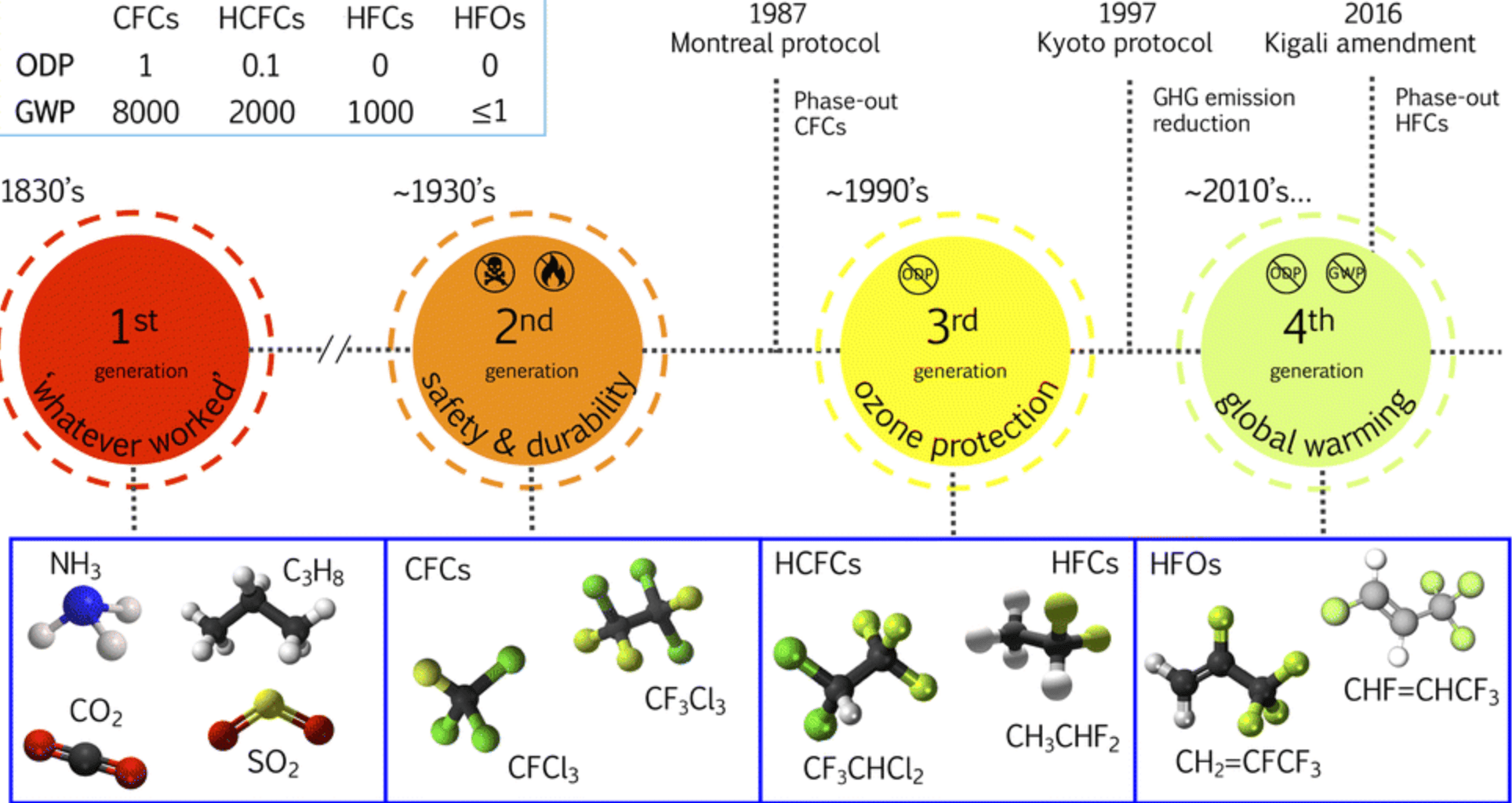
Photo Credit: Royal Society of Chemistry
CO₂ vs. Hydrocarbon Refrigerants: Safety Implications
CO₂ systems have limited cooling-capacity windows due to their low critical point (31.1 °C at ~7.39 MPa). Hydrocarbon refrigerants, such as propane, can reach lower temperatures, have no ozone-depleting potential, and have essentially negligible GWP; however, they are flammable and require stricter safety measures. Today’s standard operating procedures, sensors, and controls make them a viable option when safety protocols are properly followed.
Safety Procedures for U.S. Labs Using Natural Refrigerants
Adopting natural refrigerants safely starts with a clear plan. The following principles summarize the measures that laboratories should implement before operation and during day-to-day use. To operate natural-refrigerant systems safely, you’ll need to align people, spaces, and equipment. The steps below outline how to prepare and maintain safe conditions over time.
Proper Training and Education
Ensure all laboratory personnel receive comprehensive training on the specific properties and potential hazards of each refrigerant type, for example, flammability for hydrocarbons and high pressure for CO₂. Note that hydrocarbons such as propane and butane are odorless; therefore, staff cannot detect a leak by smell. Because their specific weight is higher than that of air, these gases can accumulate on the floor if there is a leak in the refrigeration system.
Enhance Ventilation Systems
Provide adequate ventilation in laboratory spaces to reduce refrigerant buildup during a leak, especially with flammable or asphyxiant refrigerants. Install and monitor fixed sensors for flammable gases; common technologies include non-dispersive infrared and catalytic diffusion. Many of these systems also support remote monitoring. Because hydrocarbons are heavier than air, place sensors near the floor.
Regular Maintenance and Leak Detection
Implement a proactive maintenance schedule and employ advanced leak-detection systems to identify and address potential issues before they become hazardous. This can significantly reduce the risk of accidents or exposure. In addition to your routine visual checks, consider an annual preventive maintenance plan for your circulators through your service provider or the manufacturer. JULABO Shield provides this kind of support and includes a warranty extension for added peace of mind.
Adhere to Safety Standards and Classifications
Follow established safety standards and classifications, such as those outlined in ISO 817:2014, which provide guidelines for refrigerant safety based on toxicity and flammability data. This ensures a systematic approach to risk assessment and mitigation.
Laboratory Preparation and Planning
Before you shift your lab to natural refrigerants, you need to take your space design and application into consideration. To operate a circulator with flammable refrigerants, the room must have a minimum volume so that, in the event of a leak, the gas concentration remains below the lower explosion limit (LEL) or lower flammability limit (LFL). These terms are used interchangeably. When concentration is below the LEL/LFL, ignition will not occur, even at temperatures above the flash point.
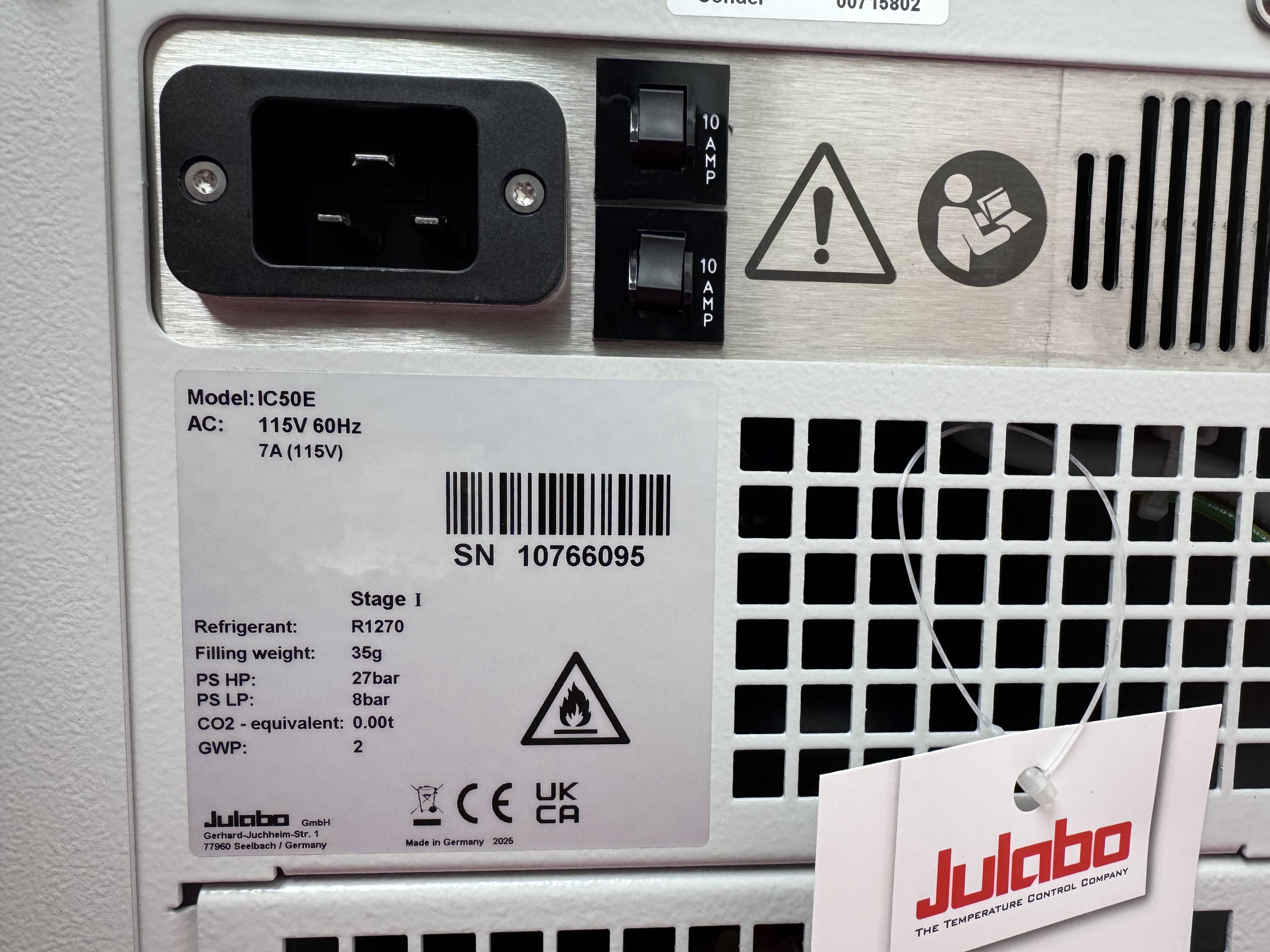
The minimum room or space sizes depend on the circulator’s filling volume. You can usually find this value on the type label located on the back of the temperature control unit. The operating manual also lists the minimum space requirements.
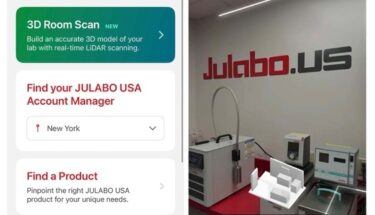
Next, determine the size of the room where you plan to operate the refrigerated unit. You can do this without a tape measure by using a laser measure or the LiDAR function of your smartphone. JULABO USA has updated its smartphone app to assist with this and to quickly and easily indicate whether a specific JULABO unit can be operated in the specified room.
Even if no leak is expected, exercise caution around open flames and other potential ignition sources. Keep a suitable fire extinguisher present, and ensure personnel are trained well in its use.
Important Design Safety Features To Look for in Equipment
It’s essential to work with natural refrigeration systems that incorporate safety features, such as leak-tight systems with soldered junctions in the refrigeration cycle rather than crimped ones.
Use components that adhere to UL 60335-1 and UL 60335-2-34, or the corresponding European EN 60335-1 and EN 60335-2-34 harmonized with CSA C22.2 No. 60335-2-34. These standards are explicitly defined for equipment using natural refrigerants and help reduce the risk of fire.
Compressors designed for use with natural refrigerants should carry the OSHA flame warning label, and the compressor should clearly indicate which refrigerants are compatible.
In case of very sensitive environments, such as C1D1 and C1D2 categories, explosion-proof circulators may be available as customized units, which tend to be pricey, or enclosures can be offered by specialized manufacturers to run the circulators inside, given that the room size follows the rules mentioned above or ventilation is guaranteed to be sufficient.
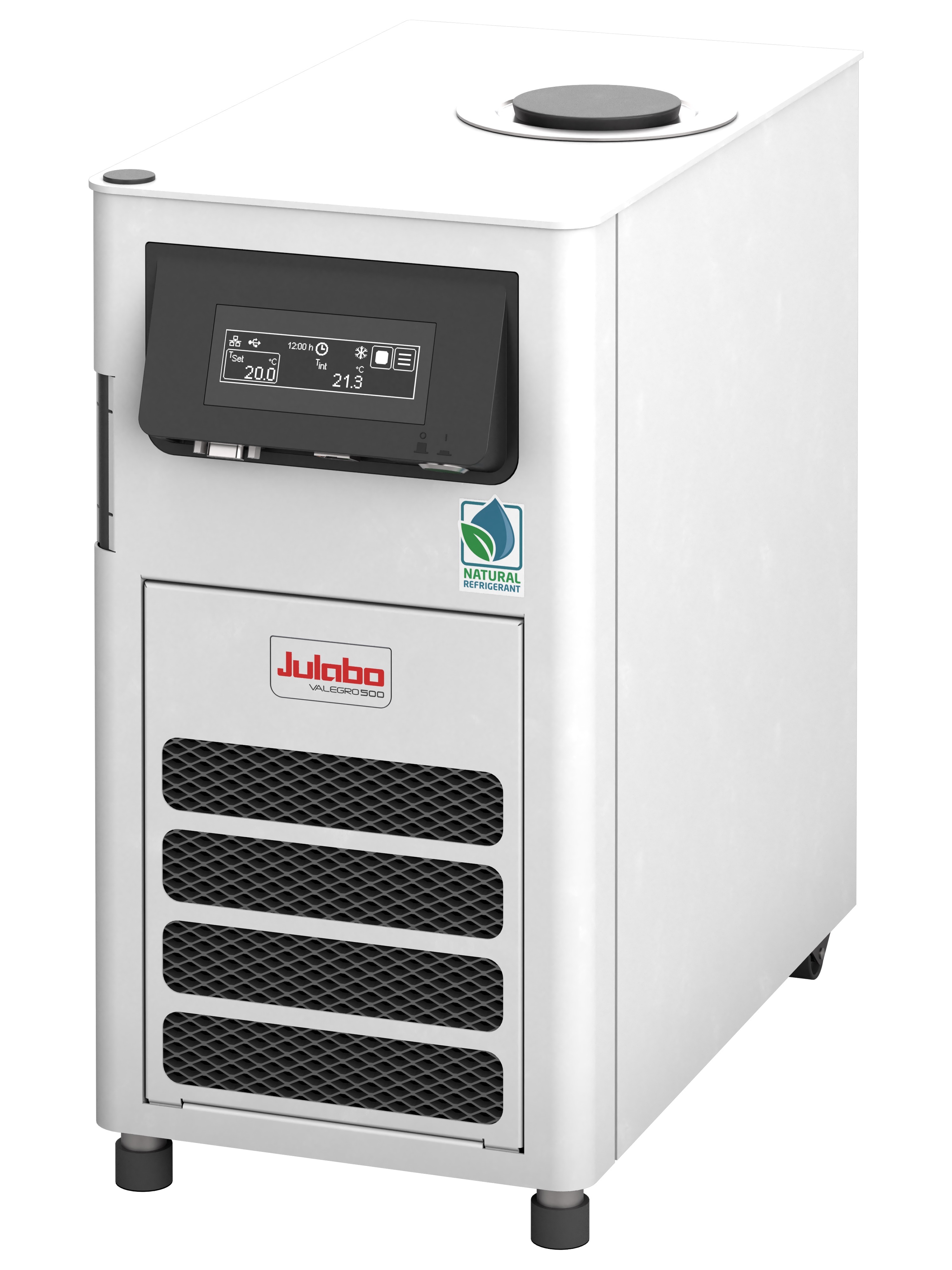
JULABO VALEGRO 500
Conduct Regular Risk Assessments
Conduct ongoing risk assessments to identify potential hazards and implement appropriate control measures, and document them in your quality management process descriptions. This proactive approach helps maintain a safe working environment.
Additional Training for Technical Service Personnel
All technicians should receive comprehensive training on the safe handling and use of natural refrigerants. Develop and enforce strict safety guidelines for refrigerant handling, leak detection, and emergency procedures. This includes regular safety checks on containers and systems, as well as preparing and maintaining appropriate safety equipment. A Zero Leak guideline should be established. Sensors should be installed, and ventilation should be enhanced.
Require the use of appropriate PPE (personal protective equipment) such as gloves, goggles, and respiratory masks when working with or around refrigeration systems. This helps mitigate risks associated with potential exposure or leaks.
Conclusion
Natural refrigerants offer substantial environmental benefits; however, safe adoption depends on training, ventilation, leak detection, proper room sizing relative to the charge, compliant equipment, clear labeling, and routine maintenance. With modern sensors, standardized procedures, and careful design, laboratories can safely and sustainably use natural refrigerants.
If you have any questions regarding the use of natural refrigerants in your laboratory, the JULABO team is here to help.
DISCLAIMER: To ensure safety, hydrocarbon applications are governed by various international, national, and regional standards and regulations. The main safety standards are IEC 60335-2-40, IEC 60335-2-89, ISO 5149, and EN 378. The customer assumes responsibility for following the standards for their specific use case. Each installation is unique, and the above precautions are for the safe use of JULABO products. All JULABO products are sold subject to the warranties and limitations included at the time of purchase.
FAQs Related to Natural Refrigerants in U.S. Laboratories
What room size is required for a propane-charged circulator?
Check the unit’s refrigerant charge on the type label and follow the operating manual’s minimum room-size guidance to keep the concentration below the LFL in the event of a leak.
Where should I install hydrocarbon gas sensors?
Near the floor, because propane and butane are heavier than air. Ensure adequate ventilation and remote monitoring where possible.
Which standards apply to flammable refrigerants in lab equipment?
UL/EN/CSA 60335-1 and -2-34 for equipment; ISO 817 for classifications; IEC 60335-2-40/-2-89, ISO 5149, and EN 378 for broader safety requirements.