

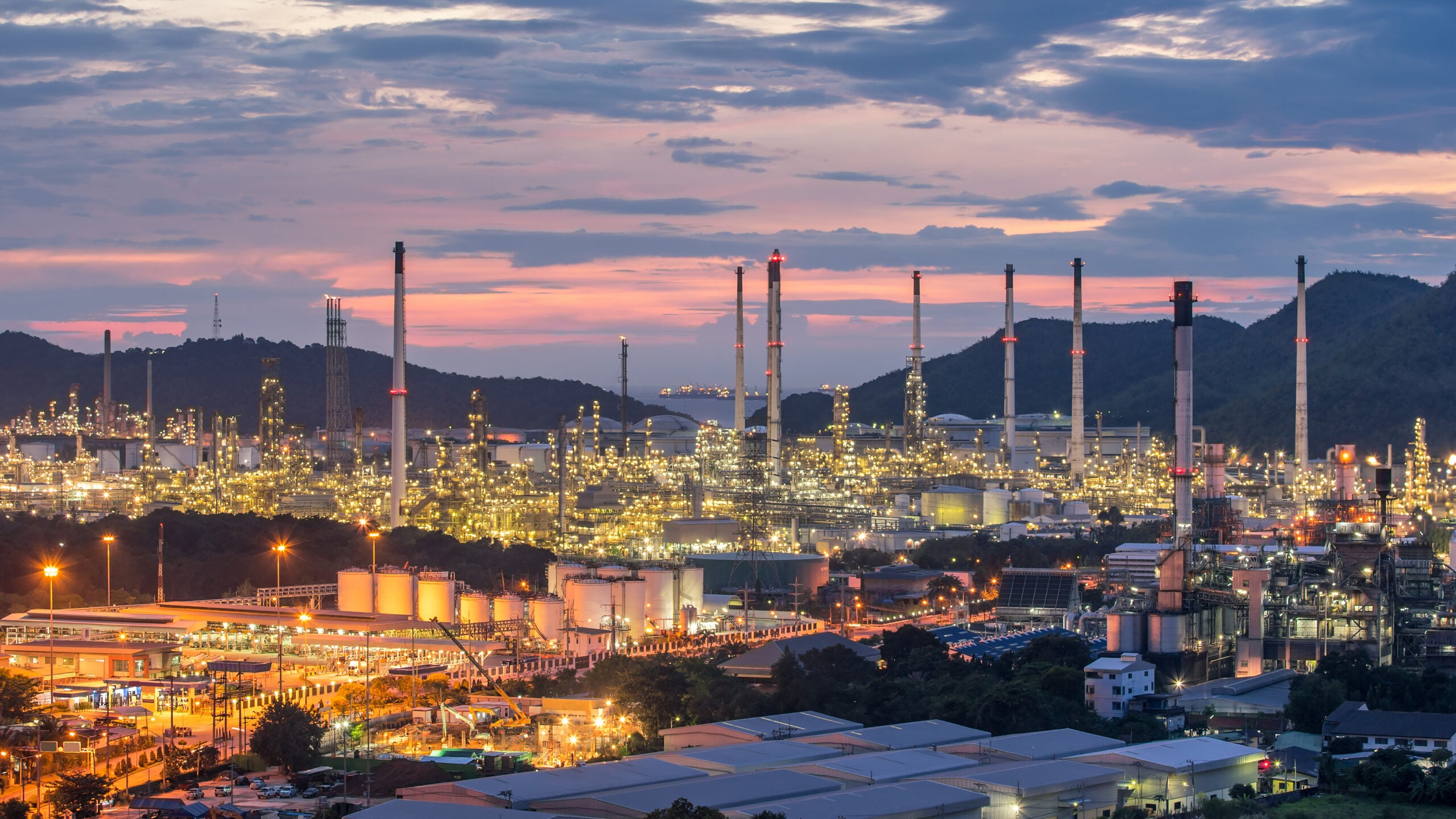
From Fuels to Materials: 5 Petrochemical Trends Changing Laboratory and Pilot Plant Testing
The petrochemical industry is entering a new phase, driven increasingly by the demand for materials, not just fuel. Oil producers are expanding chemical output, polymers are being redesigned for electric vehicles and electronics, and coatings chemistry is evolving to meet sustainability targets.
For laboratories and pilot plants, this shift means more reactions to validate, more materials to test, and tighter performance requirements. Many of these reactions and material properties depend directly on stable thermal conditions, making precise temperature control essential for reliable development and scale-up.
This growing demand for testing and validation reflects a broader industry shift. According to the International Energy Agency (IEA), petrochemicals are expected to become the largest driver of global oil demand growth from 2026 onward, consuming one in every six barrels of oil by 2030 (IEA, Oil 2025).
From Hydrocarbons to Petrochemical Building Blocks
Refining and petrochemical processing convert hydrocarbons into the molecular building blocks used across modern manufacturing:
- Ethylene — plastics and packaging
- Propylene — polymers and fibers
- Aromatics (benzene, toluene, xylene) — resins, coatings, and adhesives
As investment shifts toward these materials, laboratories and pilot facilities face growing pressure to validate processes under precise and repeatable thermal conditions.
1. The Global Shift From Fuels to Chemicals
How Is the Shift From Fuels to Chemicals Changing Petrochemical Labs?
Petrochemical investment is increasingly focused on converting hydrocarbons into chemicals rather than transportation fuels. As gasoline demand growth slows in many markets, producers are expanding facilities designed to maximize chemical output, particularly polymers, intermediates, and specialty materials.
The International Energy Agency projects petrochemical feedstock demand will reach 18.4 million barrels per day by 2030 (IEA, Oil 2025). New integrated complexes in the United States,
China, and the Middle East are being designed to convert a larger share of crude oil directly into chemical products rather than fuels (C&EN).
For laboratories and pilot facilities, this shift increases development activity before production begins, including:
- Catalyst evaluation and performance testing
- Reaction optimization and process validation
- Material qualification before scale-up
The Testing Imperative
Pilot plants play a growing role in validating processes before commercialization. Temperature instability during testing can directly affect:
- Catalyst selectivity
- Reaction yield
- Product consistency
Reliable temperature control enables reproducible data across long-duration testing campaigns and supports confident scale-up decisions.
Temperature Control Solutions and Product Recommendations:
MAGIO MX-BC6; VALEGRO 500, Forte HT60-M3-CU, PRESTO A45t
2. Rising Hydrocarbon Demand and the Emergence of Natural Refrigerants
Why Are Hydrocarbon Refrigerants Becoming Relevant Across Modern Cooling Applications?
Hydrocarbons sit at the center of petrochemical production. Molecules such as propane, propylene, and isobutane serve as feedstocks for polymers and chemical intermediates, but they are also gaining renewed importance as natural refrigerants across multiple industries.
Global regulations, including the Kigali Amendment and the U.S. AIM Act, are accelerating the transition away from high-global-warming-potential refrigerants. As a result, hydrocarbon refrigerants are increasingly used in commercial refrigeration, foodservice equipment, cold storage facilities, and industrial cooling systems where energy efficiency and environmental performance are critical.
Hydrocarbon refrigerants such as propane (R-290) and propylene (R-1270) offer several advantages:
Hydrocarbon Advantages
- Extremely low global warming potential. R-290 has a GWP of 3 compared with more than 2,000 for common HFC refrigerants, according to refrigerant data published through the U.S. EPA SNAP program.
- High thermodynamic efficiency and energy performance
- Availability within existing petrochemical supply chains
- Familiar handling practices for facilities already working with hydrocarbons
The Testing Imperative
For laboratories and pilot facilities, adopting natural refrigerant systems introduces additional planning considerations related to safety classification and facility design. Hydrocarbon refrigerants are classified as A3 (highly flammable) under ASHRAE Standard 34, meaning the allowable refrigerant charge is directly tied to room volume and ventilation conditions.
JULABO USA offers temperature control systems designed to operate with natural refrigerants, allowing laboratories to support sustainability goals while maintaining precise thermal stability. To simplify safety planning, the JULABO App includes LiDAR-based room measurement technology that enables users to scan and calculate laboratory space dimensions using a compatible mobile device. These measurements help determine whether a natural refrigerant unit can operate safely within a given environment.
Many petrochemical facilities already produce the hydrocarbons now being adopted as natural refrigerants, including propane and propylene. Using equipment designed for these refrigerants allows facilities to align with natural refrigerant production using lower-GWP cooling technologies.
Temperature Control Solutions and Product Recommendations:
VALEGRO 1201, MAGIO MS-1200F, MAGIO MX-2500F, MAGIO MS-1000FF
3. Advanced Polymer and Materials Development
How Are New Performance Materials Changing Petrochemical Testing Requirements?
Demand for petrochemical-derived materials is shifting beyond commodity plastics toward engineered polymers designed for high-performance applications across electric vehicles, electronics, aerospace, and semiconductor manufacturing.
Electric vehicle development is accelerating demand for polymers used in battery insulation, thermal management, and lightweight components. Materials such as polyamides, polyimides, and PEEK (Polyether Ether Ketone) support durability across a wide range of temperatures.
Advanced polymers are also being developed for:
- Semiconductor manufacturing environments that require chemical resistance
- Aerospace composites and lightweight structures
- High-performance adhesives and sealants
- Electronic housings and thermal interface materials
The Testing Imperative
Developing engineered polymers requires tightly controlled testing throughout synthesis and validation, including:
- Reaction temperature control during polymer formation
- Viscosity testing under stable thermal conditions
- Thermal cycling to simulate aging and stress
- Catalyst and formulation evaluation
Even small temperature deviations during synthesis can alter molecular structure and final mechanical properties. Maintaining stable thermal conditions helps ensure reproducible results during material development and scale-up.
Reliable temperature control reduces failed development batches and supports confident scale-up.
Temperature Control Solutions and Product Recommendations:
PRESTO A40, MAGIO MS-1200F, FL11006, PRESTO W50.
4. Coatings and Resin Reformulation
How Are Sustainability Regulations Changing Coatings Development and Testing?
Environmental regulations are driving widespread reformulation across the coatings industry. Manufacturers are reducing volatile organic compound (VOC) emissions by shifting from solvent-based coatings toward waterborne systems, high-solid formulations, powder coatings, and bio-based alternatives.
Regulatory initiatives under the U.S. Clean Air Act continue to tighten VOC limits across architectural, industrial, and automotive coatings, requiring manufacturers to redesign resin systems and curing chemistry while maintaining durability.
Coatings innovation is also expanding into new performance applications:
- Anti-corrosion coatings for infrastructure and energy systems
- Conductive coatings for electronics manufacturing
- Self-healing aerospace coatings
- Anti-icing surfaces for renewable energy equipment
The Testing Imperative
Reformulation requires rebuilding validation processes under controlled thermal conditions. Temperature control plays an important role in:
- Resin synthesis and formulation testing
- Controlled curing simulations
- Accelerated aging studies
- Condenser cooling during solvent recovery
Temperature variation during formulation or curing can affect adhesion, coating uniformity, and lifecycle durability. Stable thermal control enables consistent testing results during product development.
Temperature Control Solutions and Product Recommendations:
MAGIO MX-BC12, MAGIO MX-2500F, PRESTO A45t, VALEGRO 2503, FL11006.
5. Chemical Recycling and Circular Plastics
How Is Chemical Recycling Changing Petrochemical Process Development?
Petrochemical companies are investing in chemical recycling technologies designed to recover usable feedstocks from plastic waste and support circular manufacturing models.
Technologies gaining momentum include:
- Pyrolysis systems that thermally break down mixed plastics
- Depolymerization processes that recover monomers
- Solvent-based purification methods for complex materials
The Testing Imperative
Chemical recycling introduces complex thermal requirements during research and scale-up. Laboratories and pilot facilities must carefully control:
- Heating ramps during polymer breakdown reactions
- Condensation cooling used to capture recovered hydrocarbons
- Process stability across extended reaction cycles
Temperature instability can reduce recovery efficiency or increase unwanted byproducts, making reliable thermal control essential during process validation.
Temperature Control Solutions and Product Recommendations:
JULABO to fill in product recommendations MAGIO MX-BC12 HST, Forte HT30-M1-CU, VALEGRO 1201, PRESTO A45t
Frequently Asked Questions
What temperature ranges are typically required in petrochemical R&D?
Temperature requirements vary by application. Polymer synthesis and catalyst testing commonly operate between −40 °C and +200 °C, while recycling and reaction development require stable heating ramps and long-duration control.
How does temperature instability affect polymer and coatings development?
Temperature variation during synthesis or curing can affect molecular structure, adhesion, and durability. Stable thermal conditions ensure reproducible testing results.
What role does temperature control play in chemical recycling?
Processes such as pyrolysis and depolymerization depend on controlled heating and cooling profiles to maximize material recovery and reduce byproducts.
Which petrochemical facilities use precision temperature control systems?
Temperature control systems are commonly used in:
- Petrochemical R&D laboratories
- Catalyst testing facilities
- Polymer synthesis labs
- Coatings formulation environments
- Pilot plants and process development centers
Conclusion
Petrochemical innovation increasingly happens in laboratories and pilot facilities where materials, reactions, and processes must be validated before production scale. Precise temperature control supports the testing environments that allow advanced materials and sustainable technologies to move forward with confidence.
Explore JULABO USA’s temperature control solutions for petrochemical research and process development, or contact our team to discuss your application.