


5 Semiconductor Trends Pushing the Limits of Temperature Control
As semiconductor technology advances, the tolerance for error is shrinking.
Chips are getting smaller, more complex, and more powerful. That makes the conditions required to build and test them far less forgiving. Even slight temperature variation can affect alignment, material behavior, and overall device performance.
Semiconductor processes rely on precise positioning and tightly controlled chemical reactions. Temperature shifts cause materials to expand, contract, or react differently, introducing patterning errors, dimensional inconsistencies, or performance issues.
In advanced processes, temperature stability must be maintained within thousandths of a degree to ensure consistent patterning and reliable results.
Several key trends are driving these tighter thermal requirements:
- Sub-2nm process nodes and advanced lithography
- Advanced packaging and 3D chip integration
- Wide bandgap semiconductors (SiC and GaN)
- AI processors and high-bandwidth memory
- Quantum computing hardware development
1. Sub-2nm Nodes Are Shrinking the Margin for Thermal Error
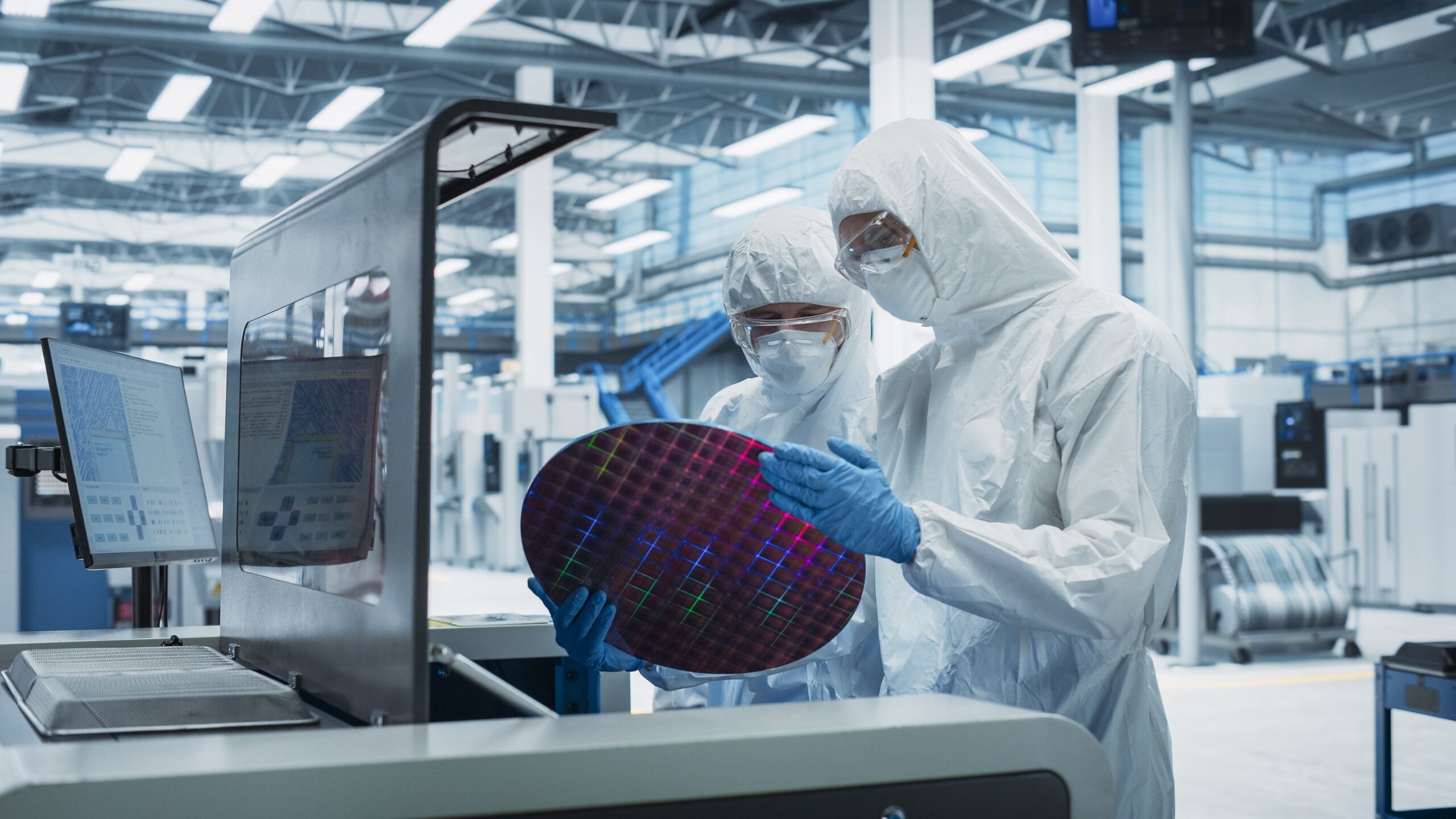
A process node is a generation of chip manufacturing technology, defined by the size of transistor features and wiring. At sub-2nm nodes, those features are approaching atomic scale — just a few atoms wide.
At that size, even small temperature variation can affect how features are formed, aligned, and reproduced across the wafer.
Technologies like extreme ultraviolet (EUV) lithography make this possible by using extremely short wavelengths of light to pattern circuits. New transistor designs, such as gate-all-around structures, also depend on this level of control.
Where temperature matters:
- Reticle stages — positioning the photomask
- Projection optics and mirrors — guiding and focusing light
- Immersion modules in DUV systems — improving resolution with liquid layers
- Atomic layer deposition (ALD) — building material one layer at a time
- Atomic layer etch (ALE) — removing material with similar precision
Small thermal shifts can lead to misalignment or focus drift. A 2025 study in Micromachines shows how nanometer-scale thermal changes impact overlay accuracy and focus.
Processes like ALD and ALE also depend on tightly controlled temperatures, while cooling requirements continue expanding into sub-zero and cryogenic ranges.
Liquid Temperature Control Solutions and Product Recommendations:
JULABO TCUs MAGIO MX-BC6, FORTE HT30-M1-CU and PRESTO A40 afford a variety of heating/cooling options for chuck and chamber components.
2. Advanced Packaging and 3D Chip Integration Are Changing How Heat Builds and Moves
As transistor scaling slows, performance gains increasingly come from how chips are combined.
Advanced packaging brings multiple chips, or “chiplets,” into a single package, either side by side or stacked vertically. High-bandwidth memory (HBM) stacks memory layers to move data faster and closer to the processor.
Instead of spreading heat across a flat surface, these designs concentrate it within tightly packed structures. Stacked chips create localized hot spots, and inner layers are harder to cool because heat must move through surrounding material. A 2025 review published by MDPI highlights how these designs create uneven temperature fields that impact performance and reliability.
Where temperature matters:
- Thermal cycling — repeated heating and cooling
- Bonding processes — requiring uniform temperature
- Test platens — controlled testing surfaces
- HBM stacks — dense, heat-generating layers
Uneven temperature distribution can affect signal integrity and reliability. IDTechEx identifies thermal management as a key growth area as power density increases.
Liquid Temperature Control Solutions and Product Recommendations:
JULABO TCUs like the MAGIO MX-1800F, MAGIO MX-2500F, and PRESTO W56 facilitate test stand cooling for 3D chips and CPUs.
3. Wide Bandgap Semiconductors Are Raising Temperature Requirements in Testing and Validation
Silicon carbide (SiC) and gallium nitride (GaN) are reshaping power electronics.
These materials operate at higher voltages, switch faster, and handle more heat than traditional silicon, making them well suited for electric vehicles, renewable energy, and high-efficiency power systems.
Where temperature matters:
- High-temperature operating life (HTOL) testing
- Thermal cycling
- High-voltage, high-current testing
- Epitaxial growth processes
SiC and GaN devices operate at higher temperatures and power densities, increasing thermal load during testing. A 2025 review in MDPI Electronics notes significantly higher power densities.
Testing must span sub-ambient to high-temperature conditions, often exceeding +200 °C. Teradyne reports testing can involve thousands of volts and amps, increasing thermal stress.
Liquid Temperature Control Solutions and Product Recommendations:
JULABO PRESTO models A40, W40, A45 and W50 provide cooling capability to +250 °C for high temperature heat removal in deposition applications.
4. AI Processors and High-Bandwidth Memory Are Pushing Thermal Limits
Artificial intelligence is driving a new class of high-density semiconductor devices. Due to the increased heat load with these powerful CPUs, air-cooling cannot cool the assemblies adequately. Liquid cooling has the capability to keep the assemblies within safe operating temperatures.
AI accelerators handle massive parallel workloads and rely on high-bandwidth memory (HBM). These designs pack more processing power into smaller areas, increasing heat generation across the chip and memory layers. That heat does not spread evenly and builds up in concentrated areas, creating temperature differences that affect performance and reliability.
Where temperature matters:
- Thermal validation under peak workloads
- Junction temperature control
- HBM stack testing
- Large-area test surfaces
AI accelerators can dissipate hundreds of watts of heat in a compact footprint, requiring precise thermal control. Data from SEMI shows continued growth in advanced packaging and HBM adoption.
A semiconductor outlook from Deloitte highlights rapid expansion in AI-driven demand.
Liquid Temperature Control Solutions and Product Recommendations:
JULABO products MAGIO MS-1200F, MAGIO MX-1800F, and MAGIO MX-2500F provide cooling capability with natural refrigerants in a small footprint for CPU test stand cooling.
5. Quantum Computing Development Is Expanding Temperature Control Beyond the Cryogenic Core
Most quantum processors rely on superconducting circuits operating near -273 °C inside dilution refrigerators. These environments fall outside conventional temperature control systems.
However, not every part of the system operates at near absolute zero. The surrounding infrastructure runs at more conventional temperature ranges and requires precise, stable control, often achieved through liquid temperature control methods.
Where temperature matters:
- Quantum chip fabrication
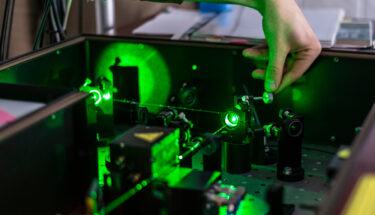
- Laser systems for trapped-ion platforms
- Photonic chip development
- Control and readout electronics
Quantum systems rely on technologies outside the cryogenic core that still require tight thermal control. Laser-based systems, in particular, introduce significant thermal loads and must maintain stability to ensure beam accuracy and system performance. Research from MIT highlights how advanced photonic and laser-based approaches depend on tightly controlled environments as quantum systems scale.
As quantum computing moves from research labs toward early commercialization, the supporting infrastructure continues to expand, bringing new demands for precise and repeatable temperature control.
Liquid Temperature Control Solutions and Product Recommendations:
High-power lasers used in quantum devices require liquid heat removal. JULABO chillers such as the VALEGRO 1201, VALEGRO 2503 and FL11006 span a broad range of cooling capacity depending on the laser cooling requirements.
Conclusion
Semiconductor innovation continues to push the limits of precision, complexity, and performance. As these technologies advance, the margin for thermal error continues to shrink.
From advanced lithography to AI processors and quantum systems, temperature control plays a direct role in maintaining consistency and reliability across manufacturing and testing.
Explore JULABO USA’s semiconductor temperature control solutions or contact our team to discuss your application.
Frequently Asked Questions
What temperature ranges are typically required for semiconductor testing and manufacturing?
Temperature requirements vary by application. Fabrication may require coolant temperatures from -40 °C to +60 °C, while testing can range from -70 °C to over +200 °C depending on the device and process.
Why is thermal stability critical in lithography?
At sub-2nm nodes, even small temperature changes can cause misalignment and focus drift. Maintaining stable, uniform conditions across optics and wafer stages is critical to pattern accuracy.
How does advanced packaging affect thermal testing?
Advanced packaging concentrates heat through chip stacking, creating localized hot spots. These must be evaluated through thermal cycling and stress testing to ensure long-term reliability.
What role does temperature control play in quantum computing?
While quantum processors operate at cryogenic temperatures, many supporting systems do not. Fabrication, photonics, laser systems, and control electronics all require precise temperature control during development and testing.
How do wide bandgap semiconductors change testing?
SiC and GaN devices operate at higher voltages, currents, and temperatures than traditional silicon. Testing requires stable control across a wider temperature range, including high-temperature operating life tests and repeated thermal cycling.